
Fitting new Brake Discs
Frederick theFrog was horrified at these brake discs. Around half the surface had flaked off the inside of the disc, and the other half was badly scored.
Frederick wondered what sort of person could possibly drive a car in this sort of disrepair.
At the time of writing a pair of new front disc brakes and pads for a Renault 4 cost about £40. Fitting them takes about 45 minutes each side (once you have the hang of it).
Clementine wonders why Frederick didn't do the job years ago.
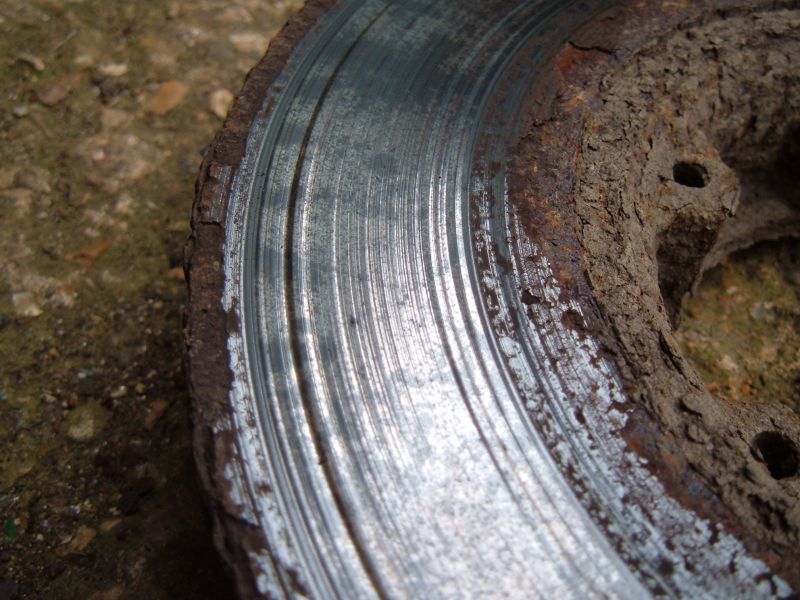
OK then. So Frederic has been a bit busy over the last few years.
The Haynes manual suggests starting off the process of disc replacement by jacking up the car, removing the wheel, then undoing the driveshaft nut while a friend stands on the brakes.
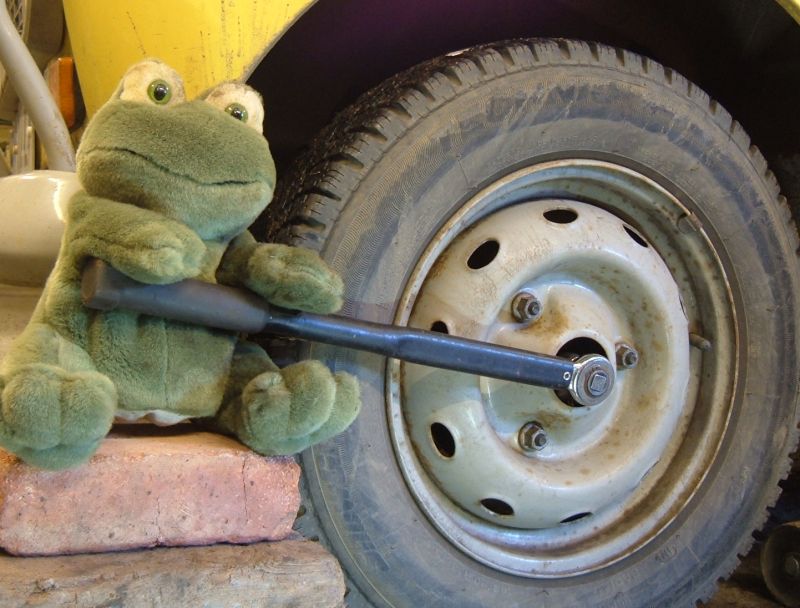
Frederick doesn't have any friends, so he pulled out the center cap on the wheel and removed the driveshaft nut while the wheel was still firmly on the ground.
After both parts of the brake caliper had been removed the brake disc just needed a good hammer to push it off the bearings.
Cast iron is brittle, so it's best to hold a thin piece of wood between the disc and the hammer to soften the blow. Alternatively Frederick might have worn some safety glasses in case the disc had fractured.

The old disc was removed from the hub by unscrewing 6 bolts. (It's easiest to loosen the bolts while the disc is still on the car).
Before fitting the new disc it makes sense to clean the mating surface on the hub with a wire brush. Any rust, dirt, or paint on the mating surface would make the disc sit at a slight angle and wobble as it went around causing annoying brake judder.
With the new disc screwed back to the hub it could be fitted to the stub axle. Reassembly is far from the reverse of disassembly. Rather than a hammer the driveshaft nut can be used to pull the hub back onto the bearing.

The caliper carrier has a couple of sliding pins which should move freely. They can become stiff or even seize which would reduce brake efficiency quite a bit.
One of the pins on this carrier needed a vice and a hammer to remove. A little rubber compatible grease (the red brake grease works a treat) was enough to make it slide freely.
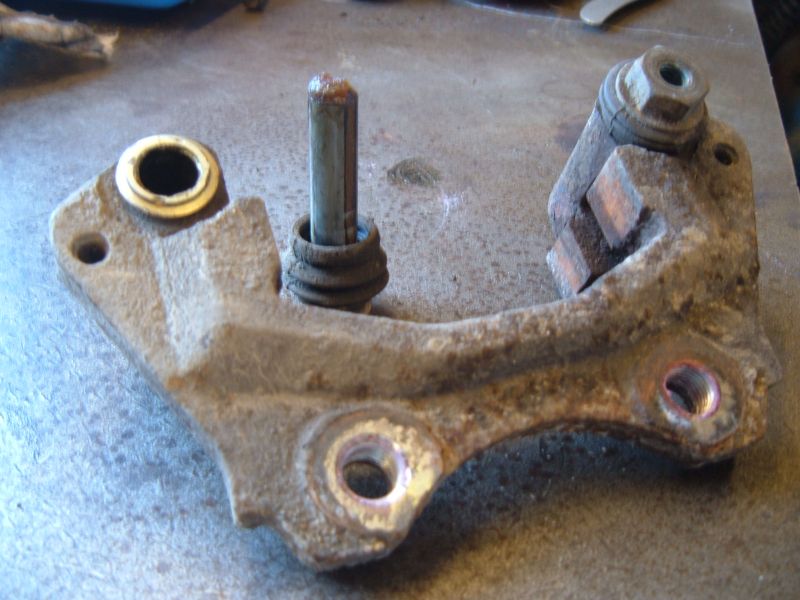
Replacing the brakes on an old car is much more involved than Mr Haynes might have you believe.
New pads are thicker than the old worn pads, so they'll sit slightly further outboard. Right in that spot that's become rusty over the years. Any part of the brakes that might contact the pads needs to be cleaned up with a wire brush and sandpaper, and then smeared with copper grease. Otherwise the pad might bind to the disc and overheat. And make the poor Renault even slower!

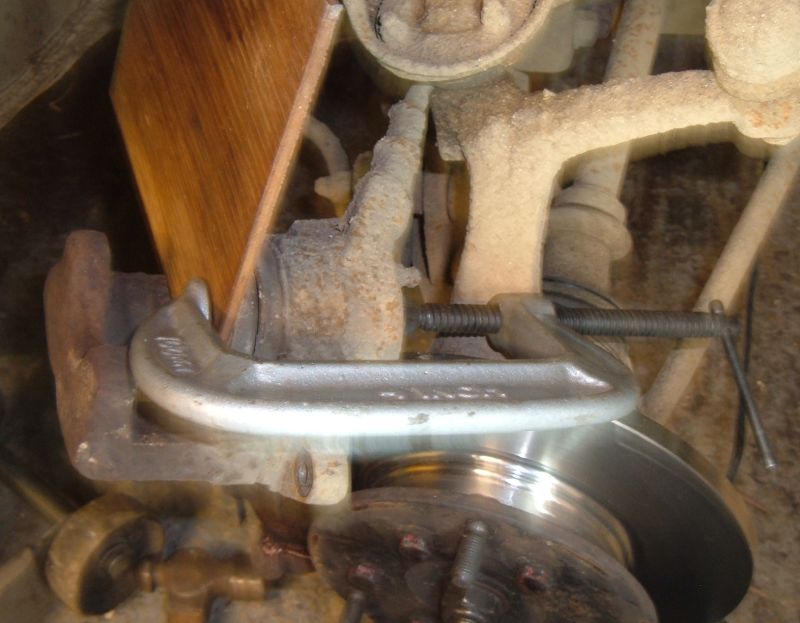
Frederick worked out that new pads are thicker than old pads. The caliper piston would need to be pushed a bit further into the caliper before it could be refitted.
A G-clamp and a bit of wood are quite handy for retracting the piston.
A little copper grease on the outside of the pads where they contact the piston is useful for preventing brake squeal.
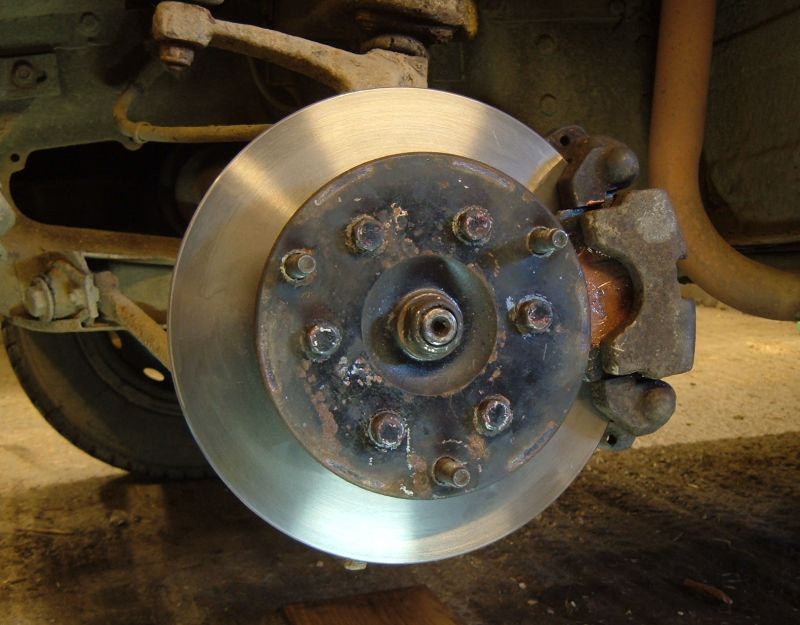
It's worth it when the job is finished. Not only do the discs look shiny, but they also work a whole lot better.
Braking becomes a joy. It's smoother, much more effective from a stopping point of view, and also quieter. The old grating noises have gone, and the car now stops on a sixpence.
The mucky frog finds the abundance of sixpences very odd so long after decimalisation.
Back to Tech Tips




Engine
Electrical
Suspension
Front suspension lower balljoint
Brakes and hubs
Other
Frederick's angle grinder (RIP)